

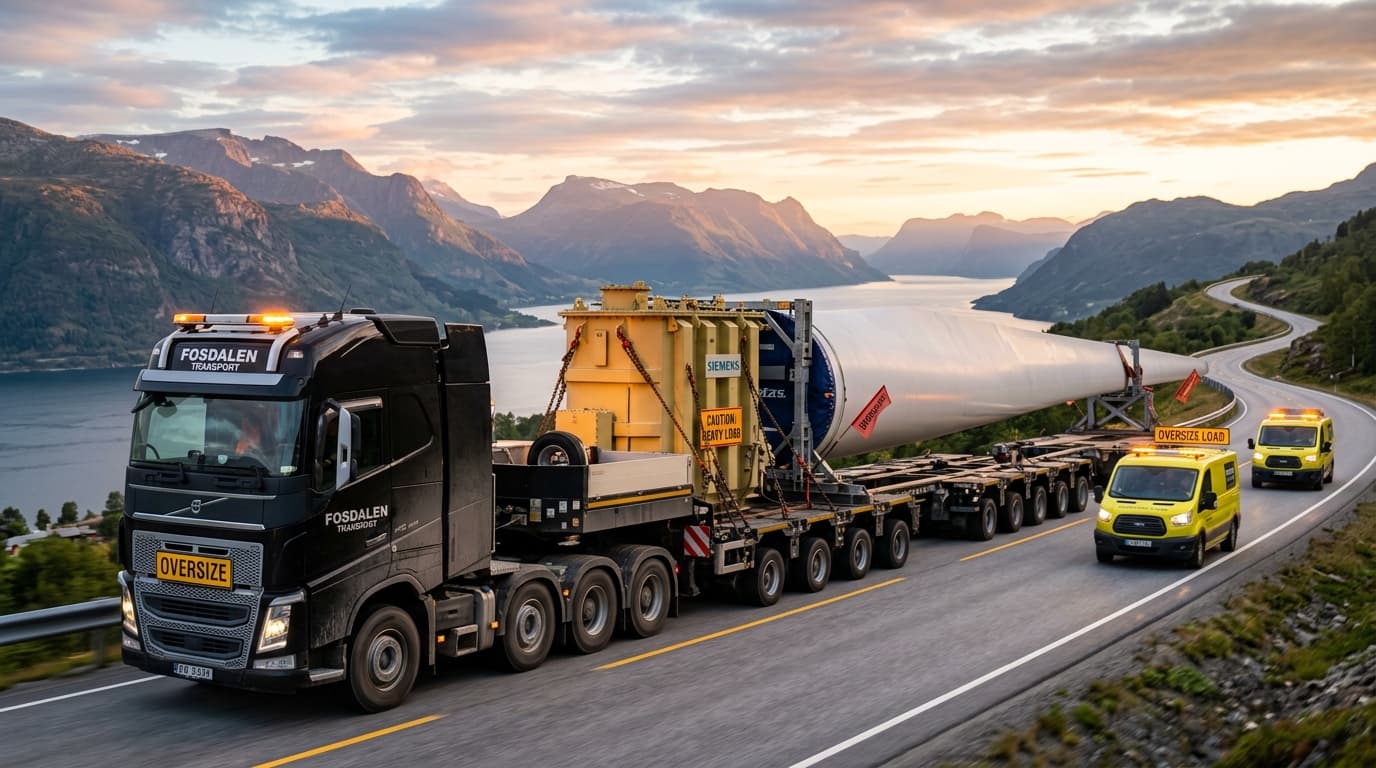
Engineering Beyond Boundaries: Project Cargo Logistics
Turbines, industrial boilers, power transformers, massive stamping machinery, and turnkey refinery modules exceed standard intermodal envelopes (2.55 m width, 4.00 m height, 13.60 m length, and 24 metric tons gross weight). Handling these giant payloads constitutes the realm of Out-of-Gauge (OOG) and Heavy Lift Project Logistics.
Project logistics is fundamentally an applied engineering discipline encompassing civil route evaluations, structural bridge calculations, multi-crane tandem lift simulations, and complex civil permit authorizations.
The Imperative of Detailed Route Surveys
Before a multi-hundred-ton consignment moves, the intended transit corridor must be verified down to the centimeter. Structural miscalculations risk catastrophic bridge collapses, overhead structure strikes, or urban electrical grid strikes.
Core Critical Focuses of Engineering Route Surveys:
- Bridge and Viaduct Dynamic Capacity: Ensuring gross axle weights do not exceed structural civil deck ratings. Heavy hauliers deploy multi-axle modular trailers to disperse payload footprint.
- Vertical Clearances: Laser clearance verification of highway overpasses, toll portals, overhead cantilevers, tunnel crowns, and high-voltage catenary lines.
- Horizontal Swept Path Analysis: Computerized swept path modeling of road intersections, roundabouts, and toll barriers to ensure ultra-long (40 to 60 meters) vehicle articulation.
- Ground Bearing Capacity (GBC): Soil geotechnical load testing at quay terminals and plant sites where crane outrigger pads apply concentrated tons per square meter.
Specialized Project Transport Equipment Fleet
- Flat Rack (FR) Containers: Heavy-duty reinforced base platforms equipped with end walls (20'FR and 40'FR), engineered for cargo exceeding box width or height boundaries.
- Open Top (OT) Containers: Soft-top canvas or removable hard-top units facilitating overhead gantry crane cargo positioning.
- Hydraulic Lowbed & Step-Frame Trailers: Ultra-low deck trailers (vessel decks) minimizing overall loading height, with extendable chassis beds and multiple hydraulic steering axles.
- SPMT (Self-Propelled Modular Transporters): Computer-controlled modular wheel bogies capable of 360-degree pivot maneuvering, transporting super-heavy offshore structures weighing thousands of metric tons.
Cargo Sea-Fastening: Lashing, Chocking, and Surveyor Certification
Securing high-center-of-gravity machinery against ocean swell vessel dynamics (pitch, roll, heave, sway) demands precision rigging:
- Securing Calculation: Chain tension and pad eye weld integrity calculated against IMO CSS (Code of Safe Practice for Cargo Stowage and Securing) parameters.
- Marine Warranty Surveyor (MWS) Approval: Independent marine surveyors verify stowage calculations, inspect lashing geometry, and execute formal Lashing Approval Certificates before vessel departure.
Project Execution Matrix
| Stage | Action Item | Ownership | Typical Lead Time |
|---|---|---|---|
| 1. Engineering Feasibility | CAD technical drawing and center-of-gravity (CoG) review | Technical Project Engineers | 1 – 3 Days |
| 2. Physical Route Survey | Bridge structural verification and swept path analysis | Field Operations Team | 3 – 7 Days |
| 3. Permits & Escort Escort | Special road permits, utility line raising, police escorts | Regulatory Permitting Desk | 5 – 15 Days |
| 4. Rigging & Lashing | Tandem crane lift and certified marine lashing | Certified Rigging Engineers | 1 – 2 Days |
Turnkey Project Cargo Capabilities with Arionex
Arionex Group delivers turnkey project logistics across energy, infrastructure, industrial mining, and mechanical sectors.
From custom vessel chartering and OOG breakbulk bookings to heavy-duty hydraulic lowbed road transport, our engineering teams ensure seamless, risk-free execution.