

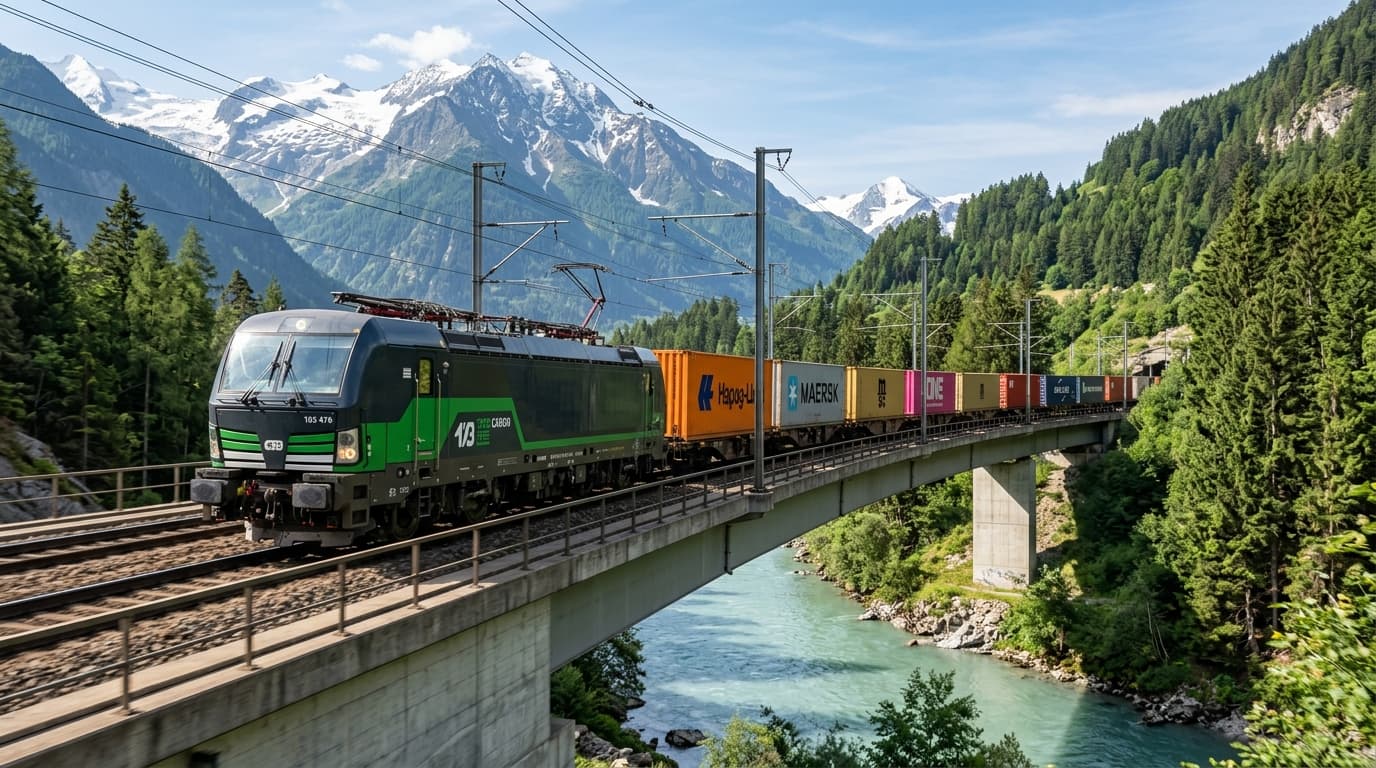
The Backbone of Sustainable Supply Chains: Rail and Intermodal Logistics
In response to global climate initiatives, the European Union's European Green Deal and the Carbon Border Adjustment Mechanism (CBAM) are reshaping global freight paradigms. Shippers are now compelled to audit not merely shipping charges and lead times, but the specific grams of carbon dioxide released per ton-kilometer transported.
Positioned at the leading edge of this environmental transition, Rail and Intermodal Transport provides up to a 70% to 80% reduction in greenhouse gas emissions compared to long-haul road transport, unimpeded by adverse weather or weekend trucking bans.
Understanding Multimodal vs. Intermodal Logistics
Supply chain practitioners frequently confuse these terms; the operational distinction is critical:
- Multimodal Logistics: Movement of cargo utilizing multiple transportation modes (e.g., vessel plus truck), where the physical cargo may be unpacked, transferred, and handled across transshipment platforms.
- Intermodal Logistics: Transport of cargo within the same intermodal loading unit (such as a 45' container, swap body, or semi-trailer) across rail, sea, and road modes without any intermediate cargo handling. Goods are loaded once at the consignor's factory, sealed, and discharged only at the consignee's warehouse.
The Strategic Silk Road: The Trans-Caspian Middle Corridor (TITR)
Geopolitical complexities along the Trans-Siberian corridor and maritime bottlenecks surrounding Bab-el-Mandeb and Suez have propelled the Middle Corridor (spanning China, Kazakhstan, the Caspian Sea, Azerbaijan, Georgia, Turkey, and Europe via the Baku-Tbilisi-Kars railway) into premier prominence.
Transit Performance Comparison:
- Maritime Routing (Cape of Good Hope / Suez): 35 to 50 days between East Asia and Europe.
- Northern Rail Corridor (Trans-Siberian): Elevated geopolitical, border, and secondary sanctions vulnerabilities.
- Middle Rail Corridor (Rail + Ro-Pax): Direct transit completed within 14 to 18 days, slashing lead times by over 50% relative to maritime transit.
Green Metrics: Carbon Footprint Benchmarking
Analyzing greenhouse gas emissions per ton-kilometer (g CO₂ / tkm) demonstrates the unmatched sustainability profile of rail infrastructure:
| Transport Mode | Average Carbon Intensity (g CO₂ / ton-km) | Emission Reduction vs. Road | Weather Reliability |
|---|---|---|---|
| Air Freight | 500 – 650 g | Negative (-700%) | Susceptible to weather |
| Road Freight (Diesel HGV) | 62 – 110 g | Baseline (0%) | Moderate (Snow, border queues) |
| Deep Sea (Ultra Large Boxship) | 10 – 25 g | +75% Reduction | Moderate (Maritime storms, port delays) |
| Electrified Rail Freight | 6 – 18 g | +80% to +90% Reduction | Extremely High (All-weather schedule) |
The 45' High Cube Pallet Wide (HCPW) Revolution
Traditional maritime containers cannot load European pallets side-by-side without leaving wasted dead space. The 45' HCPW container replicates the exact loading footprint of a standard European road mega-trailer:
- Loading Footprint: 33 European standard pallets (800 x 1200 mm).
- Cubic Capacity: 86 cubic meters with 2.69 meters internal clear height.
- Seamless Compatibility: Stacks on container chassis, rail flatcars, and Ro-Ro decks, delivering road-like loading ergonomics with the low unit economics of rail.
Scale Your Intermodal Performance with Arionex
Arionex Group engineers block train solutions and intermodal transport corridors bridging Turkey, Central Asia, and continental Europe.
Our comprehensive intermodal operations provide ESG-grade carbon reduction metrics, specialized 45' equipment, and priority border crossings for resilient industrial logistics.