

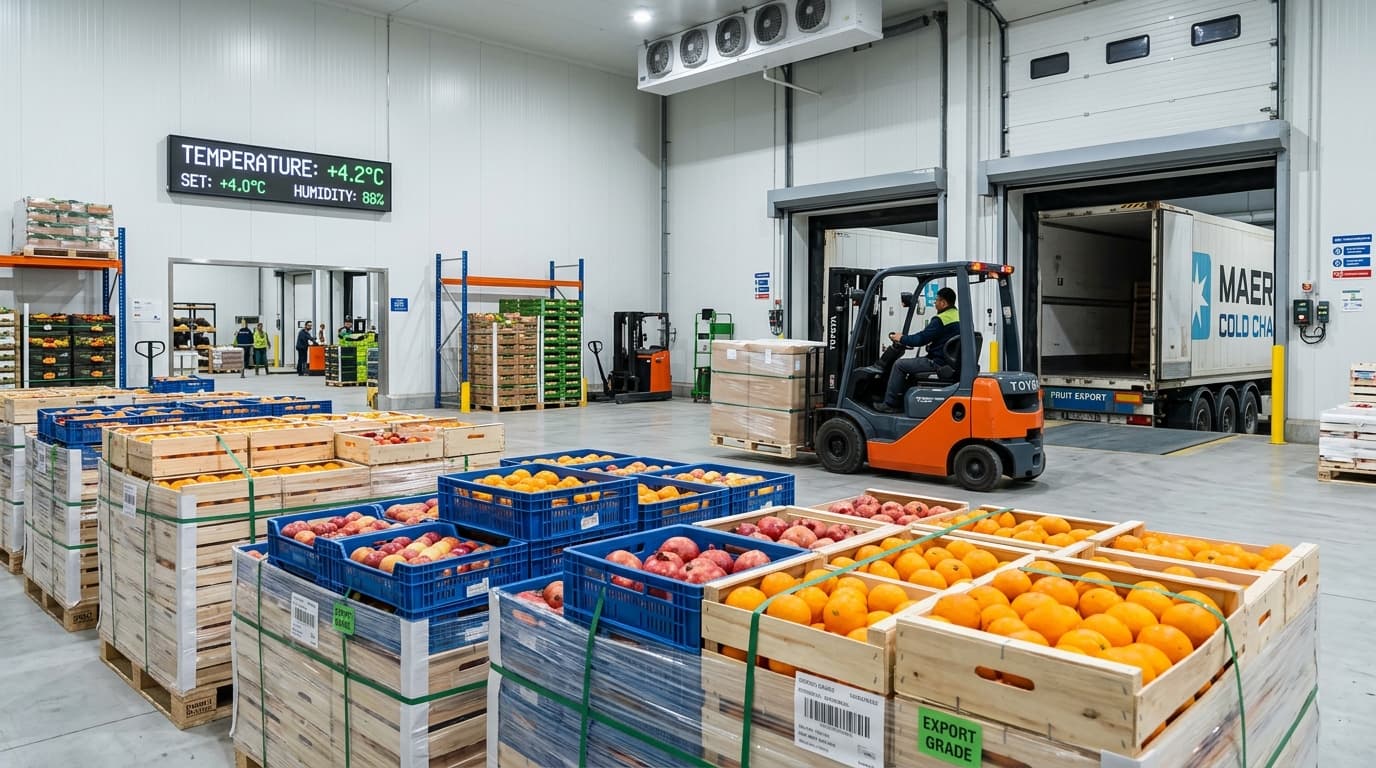
Where Every Degree Matters: The Science of Cold Chain Logistics
From perishable organic fruits and vegetables to deep-frozen seafood, life-saving vaccines, and delicate pharmaceutical reagents, thermal integrity is paramount. In temperature-sensitive logistics, even a minor excursion outside specified bands leads to irreversible cargo spoilage, regulatory rejection, and significant public health liabilities.
Cold Chain Logistics is an engineering-driven supply chain discipline ensuring end-to-end thermal continuity from manufacturer loading docks to destination retail shelves.
Primary Temperature Regimes and Sectoral Classifications
International cold chain frameworks classify temperature requirements into well-defined segments:
- Deep Frozen (-18°C to -25°C):
- Cargo Profiles: Frozen red meat, poultry, seafood, ice creams, pre-baked bakery items.
- Mandate: Internal cargo core temperature must never rise above -18°C throughout the transit journey.
- Chilled / Fresh (+2°C to +8°C):
- Cargo Profiles: Dairy goods, fresh meat cuts, vaccines, biological sera, insulin.
- Mandate: Maintaining a narrow band above 0°C to prevent crystallization while suppressing microbial activity.
- Controlled Ambient (+15°C to +25°C):
- Cargo Profiles: Premium confectionery, tablets, clinical diagnostic components, high-end cosmetics.
- Mandate: Insulation against scorching summer heatwaves or sub-zero winter freezes.
Regulatory Frameworks: The ATP Convention
The United Nations ATP Convention (Agreement on the International Carriage of Perishable Foodstuffs) governs cross-border refrigerated transport by certifying structural thermal insulation and refrigeration plant performance.
- IR Class (Heavily Insulated): Reinforced insulated wall design minimizing thermal leakage (K-coefficient ≤ 0.40 W/m²·K).
- FRC Certification: Mechanical refrigeration units capable of chilling down to -20°C under +30°C external ambient conditions. FRC is the recognized benchmark for premium food and clinical goods.
Modern Cold Chain Telemetry and IoT Surveillance
Effective reefer management goes far beyond running a mechanical compressor; rigorous validation is legally mandated:
- Cellular IoT Telematics: Continuous probe readouts stream cabinet air and probe temperature, humidity, and door-opening status to central cloud controllers. Automated SMS/Email alerts trigger instantly upon threshold breaches.
- Calibrated USB Data Loggers: Single-use or multi-trip loggers placed inside pallet cores generate certified time-temperature graph PDFs upon consignee delivery.
- Multi-Temperature Compartmentalization: Movable longitudinal and transverse bulkheads facilitate simultaneous multi-temp transport (e.g., -18°C and +4°C) in a single trailer.
Risk Prevention Matrix
| Peril Vector | Operational Impact | Mitigation Protocol |
|---|---|---|
| Failure to Pre-Cool Reefer Trailer | Warm internal air spikes product core temperature | Compulsory 90-minute pre-cooling to target set-point before docking |
| Loading Dock Thermal Shock | Ambient moisture condensation and frost formation | Inflatable dock seals sealing trailer aperture during loading |
| Restricted Airflow Geometry | Hot-spots formed in choked pallet corners | Strict compliance with floor T-bar channels and overhead airflow baffles |
| Mechanical Compressor Stoppage | Temperature runaway | Dual-electric backup generators and 24/7 pan-European service contracts |
Arionex Cold Chain Excellence
Arionex Group operates a modern fleet of GPS/telematics-equipped refrigerated trailers and smart reefer ocean containers across Europe, the Balkans, and the Middle East.
Fully aligned with HACCP, ISO 22000, and Good Distribution Practice (GDP) guidelines, our cold chain team safeguards the therapeutic efficacy and culinary freshness of your sensitive cargo.